
Jakarta, IDN Times – The Jakarta Composite Index (IHSG), a key indicator of the Indonesian stock market’s health, concluded the week of July 20-24, 2026, with a notable decline. The index weakened by 0.57 percent, reflecting a period of cautious investor sentiment and varied stock performance across the board. This weekly dip signals a dynamic period for the Indonesian financial markets, prompting closer examination of underlying factors.
According to data from IDX Mobile, cited on Sunday, July 26, 2026, the IHSG traded within a range of 6,159 to 6,454 throughout the week. This fluctuation indicates a degree of volatility as market participants reacted to various domestic and global cues. Despite the overall downward trend in the index, specific segments of the market exhibited robust activity, underscoring the complex nature of stock market movements.
Total trading volume for the week reached an impressive 218.4 billion shares, demonstrating sustained interest and liquidity within the Indonesian stock exchange. The aggregate transaction value amounted to IDR 98.78 trillion, executed across 13.34 million separate transactions. These figures highlight the significant capital flow and active participation from both institutional and retail investors during the period. While the IHSG experienced a slight contraction, the high volume and value of transactions suggest a healthy, albeit challenging, trading environment.
Interestingly, the market capitalization for the week closed at IDR 10.87 trillion. This figure represents an increase of 1.12 percent from the previous week’s IDR 10.75 trillion. This growth in overall market value, even as the IHSG itself declined, can be attributed to several factors. It might indicate that while the broader index was pulled down by some heavyweight stocks, other companies, particularly those with substantial market caps, saw appreciation, or perhaps new listings contributed to the overall market valuation. This divergence between index movement and total market capitalization often reflects nuanced market dynamics where specific sectors or large-cap stocks may outperform the general trend.
Foreign Investors Register Significant Net Sell of IDR 3.4 Trillion
A crucial aspect of the week’s trading activity on the Indonesian stock exchange was the composition of transaction values, which showed a clear dominance by local investors. Domestic participants accounted for 69 percent of the total transaction value, while foreign investors contributed the remaining 31 percent. This distribution underscores the growing influence and participation of Indonesian investors in their national market, a trend that has been observed over recent periods.
Breaking down the figures further, local investors demonstrated a strong buying appetite, acquiring shares worth IDR 69.63 trillion. Their selling activity was slightly lower at IDR 66.25 trillion, indicating a net buying position from domestic capital. This robust local participation often provides a crucial buffer against external market shocks and reflects confidence in the domestic economy and corporate prospects.
Conversely, foreign investor activity during the week painted a different picture. Foreign buying reached IDR 29.15 trillion, but their selling significantly outpaced this, totaling IDR 32.53 trillion. This disparity resulted in a substantial net sell position for foreign investors, amounting to IDR 3.4 trillion. This shift is particularly noteworthy when compared to the previous week, which saw a foreign net buy of IDR 442.05 billion.
The transition from a net buy to a significant net sell position by foreign investors in just one week suggests a notable change in sentiment or strategic positioning. Such a substantial outflow of foreign capital can be influenced by various factors, including global economic uncertainties, changes in commodity prices, shifts in interest rate expectations in major economies, or specific concerns related to the Indonesian market or political landscape. This trend deserves close monitoring as foreign capital flows are often a key indicator of international confidence in emerging markets like Indonesia.
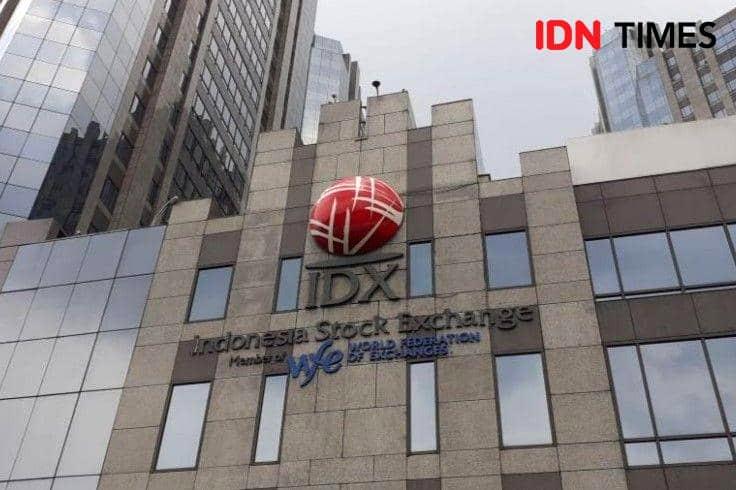
Top Performing Stocks: Leading the Market Gains
Despite the overall weakness of the IHSG, the Indonesia Stock Exchange (BEI) reported that ten stocks recorded impressive gains, strengthening by 26 percent or more, thus emerging as the week’s top performers or “top gainers.” These high-performing stocks often attract investor attention, signaling potential growth areas or successful company-specific developments. Their strong showing highlights that even in a declining market, opportunities for significant returns can exist for selective investors.
Leading the pack was PT Alakasa Industrindo Tbk (ALKA), which soared by an astounding 89.66 percent to reach IDR 1,375. Following closely was PT Intermedia Capital Tbk (MDIA), with an 89.55 percent increase, closing at IDR 127. These near-doubling performances demonstrate significant investor interest, potentially driven by positive corporate news, strong earnings reports, or speculative buying. Such rapid appreciation can be a double-edged sword, offering high rewards but also carrying increased risk.
Other notable top gainers included PT Multipolar Technology Tbk (MLPT), which rose 51.97 percent to IDR 1,780, and PT Maha Properti Indonesia Tbk (MPRO), gaining 45.71 percent to IDR 14,425. These companies, spanning technology and property sectors, reflect specific investor confidence in their business models or future prospects. PT Bersama Zatta Jaya Tbk (ZATA) also saw a significant boost, up 40 percent to IDR 70, alongside PT M Cash Integrasi Tbk (MCAS), which climbed 38.96 percent to IDR 214. The diverse nature of these top gainers suggests that market strength was not confined to a single sector but rather spread across various industries, indicating specific company-driven rallies.
Rounding out the list of impressive performers were PT Abadi Lestari Indonesia Tbk (RLCO), with a 36.25 percent increase to IDR 4,510, and PT Futura Energi Global Tbk (FUTR), up 33.63 percent to IDR 302. Finally, PT Estika Tata Tiara Tbk (BEEF) saw a 28.79 percent rise to IDR 340, and PT Graha Andrasentra Propertindo Tbk (JGLE) gained 26 percent, closing at IDR 63. These strong performances underscore the dynamic nature of stock market investing, where individual stocks can defy broader market trends due to company-specific catalysts or renewed investor interest.
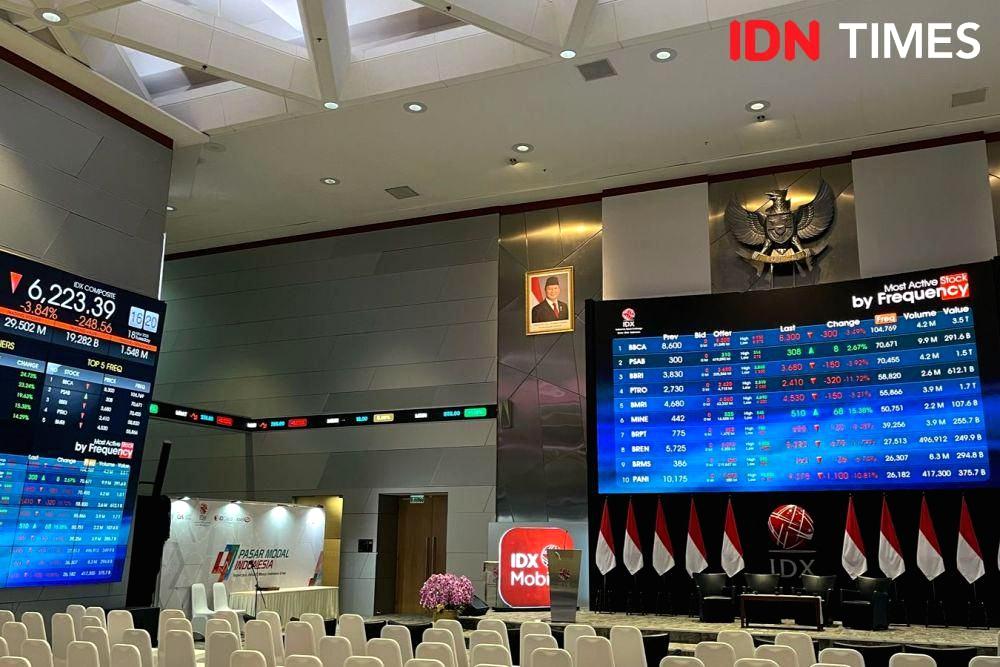
Stocks Experiencing Sharp Declines: The Week’s Top Losers
While some stocks soared, the overall weakening of the IHSG was accompanied by significant declines in other companies. Ten stocks recorded sharp losses, falling by more than 12 percent, earning them the unfortunate designation of “top losers” for the week. These substantial drops often signal negative company-specific news, sector headwinds, or broader market corrections that disproportionately affect certain equities.
Leading the list of decliners was PT MD Entertainment Tbk (FILM), which saw its share price plummet by 29.57 percent to IDR 1,060. This steep drop indicates a strong bearish sentiment, potentially triggered by disappointing financial results, shifts in market competition, or other adverse corporate developments. Similarly, PT Niramas Utama Tbk (JELI) experienced a 27.93 percent fall, closing at IDR 645, highlighting vulnerability in its specific market segment.
Other companies experiencing significant setbacks included PT Prodia Diagnostic Line Tbk (PRDL), which dropped 25.91 percent to IDR 286, and PT Puri Sentul Permai Tbk (KDTN), down 24.79 percent to IDR 440. These substantial losses reflect investor concerns that could range from sector-specific challenges, such as regulatory changes or increased competition, to company-specific operational issues. The swiftness of these declines often leads to increased scrutiny and cautious approaches from investors.
Further down the list, PT Harapan Duta Pertiwi Tbk (HOPE) fell by 18.06 percent to IDR 177, and PT Bekasi Asri Pemula Tbk (BAPA) declined 17.98 percent to IDR 187. The real estate and related sectors often react sensitively to economic forecasts and interest rate changes, which could be contributing factors to such movements. PT City Retail Developments Tbk (NIRO) lost 15.43 percent, closing at IDR 137, while PT MNC Digital Entertainment Tbk (MSIN) decreased by 15.35 percent to IDR 386. These declines in the retail and media sectors could be indicative of shifting consumer spending patterns or competitive pressures.
Rounding out the list of top losers were PT RANS Entertainment Indonesia Tbk (RANS), with a 14.4 percent drop to IDR 214, and PT Lion Metal Works Tbk (LION), which declined 12.37 percent to IDR 340. The presence of companies from various industries among the top losers underscores that market corrections and profit-taking can impact a broad range of stocks, regardless of their sector. Investors often analyze these movements to identify potential risks or areas of market weakness that may persist in the short to medium term.
Why the IHSG Can Decline Amidst Economic Growth
The question of why the IHSG might experience a decline even when the broader economy is growing is a common one among investors. This apparent disconnect, where the stock market’s performance diverges from macroeconomic indicators, can be attributed to several complex factors. Understanding these dynamics is crucial for investors seeking to navigate the Indonesian financial landscape effectively. The stock market is often seen as a forward-looking indicator, discounting future earnings and economic conditions, rather than simply reflecting current data.
One primary reason for this divergence is that the stock market reacts to expectations and future projections, not just current economic realities. While Indonesia’s economy might be growing, investor sentiment could be dampened by concerns about future challenges such as rising inflation, potential interest rate hikes, or slowing global growth that could eventually impact corporate earnings. If companies are expected to face higher operational costs or reduced consumer demand in the future, their stock prices may decline even if current economic data looks positive.
Furthermore, external factors play a significant role. Global economic uncertainties, geopolitical tensions, or shifts in investor appetite for emerging markets can lead to capital outflows, as seen with the foreign net sell this week. Even if Indonesia’s domestic economy remains robust, a broader risk-off sentiment globally can prompt foreign investors to withdraw funds, putting downward pressure on the IHSG. This highlights the interconnectedness of global financial markets and their impact on local indices.
Another factor is the performance of specific sectors or dominant companies within the index. The IHSG is a composite index, meaning its movement is heavily influenced by its largest constituents. If a few heavyweight stocks, even in a growing economy, face company-specific issues, regulatory challenges, or profit-taking after a period of strong gains, their decline can drag down the entire index. This can happen even if many smaller or mid-cap companies are performing well, leading to the observed market capitalization increase alongside an index decline.
Finally, market corrections are a natural part of the investment cycle. After periods of sustained growth, investors may engage in profit-taking, leading to temporary pullbacks in stock prices. This correction can occur even in a healthy economic environment as market participants re-evaluate valuations and adjust their portfolios. Therefore, a weekly decline in the IHSG, even with economic growth, can be a normal market adjustment rather than a direct contradiction of economic fundamentals. It underscores the importance of a long-term perspective in stock market investing.
For investors new to the stock market, understanding these nuances is essential. While the allure of high-growth stocks is strong, managing risk during volatile periods is equally important. Related insights on stable investment options can be beneficial. For example, exploring articles like “5 Reasons Blue Chip Stocks Are Ideal for Beginner Stock Investors” can provide valuable perspectives on building a resilient investment portfolio.


